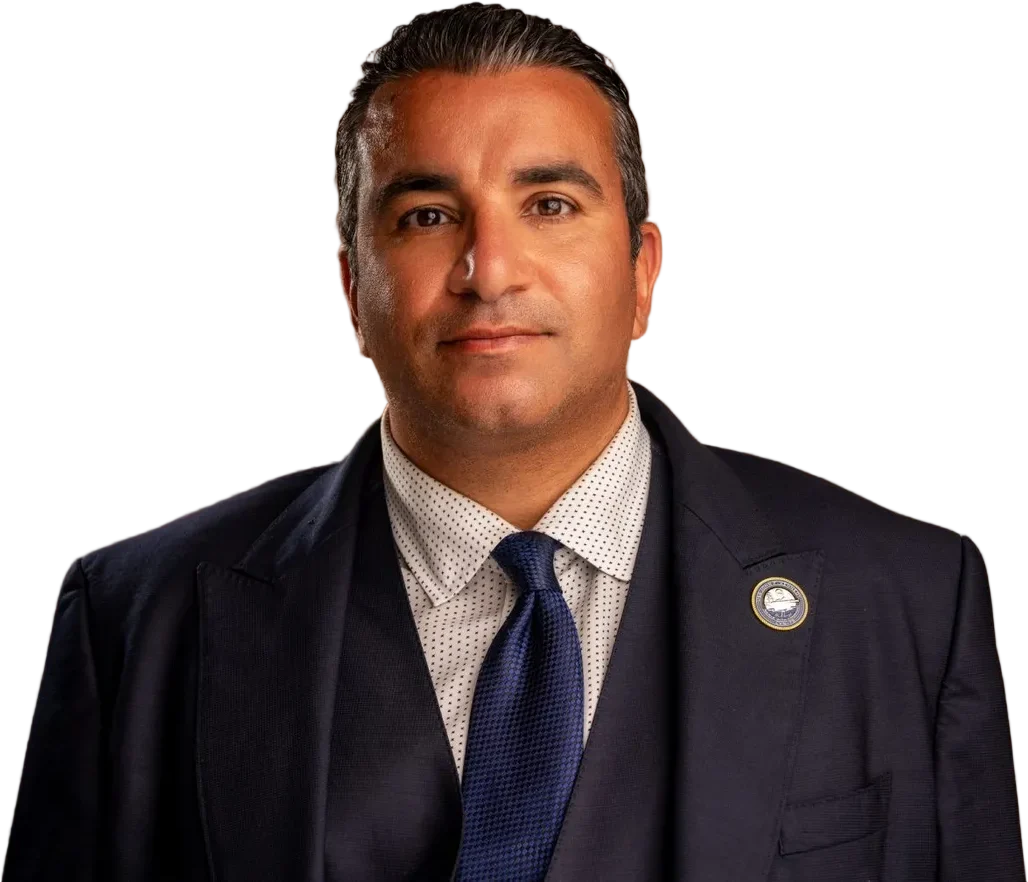

Driving while impaired by alcohol or drugs is a criminal offense in Virginia, not a traffic ticket. A DUI conviction can bring jail, fines, a year or more without a regular license, a court-ordered alcohol program and a permanent criminal record. Jad Sarsour defends DUI charges in the courts of Fairfax, Arlington, Alexandria, Loudoun and Prince William, from his office in Fairfax.
Virginia DUI at a glance
- The charge: A first or second DUI is a Class 1 misdemeanor, punishable by up to 12 months in jail and a $2,500 fine (§ 18.2-11). A third DUI within 10 years is a Class 6 felony.
- Your license: A failed breath test or a refusal suspends your license as soon as you are charged: 7 days on a first offense. A conviction then means at least a year without a regular license.
- Your record: A DUI conviction carries 6 demerit points, stays on your DMV record for 11 years, and cannot be expunged or sealed by petition (§ 19.2-392.12 lists DUI among the offenses that are ineligible).
- DUI or DWI: Virginia uses both terms for the same offense. The statute is headed "driving while intoxicated."
What Virginia's DUI law covers
The main statute, Va. Code § 18.2-266, makes it illegal to drive or operate a motor vehicle, engine or train:
- with a blood alcohol concentration (BAC) of 0.08% or more, or 0.08 grams or more per 210 liters of breath
- while under the influence of alcohol
- while under the influence of any narcotic drug or other self-administered intoxicant, alone or in combination, to a degree that impairs your ability to drive safely
- while under the combined influence of alcohol and drugs, to a degree that impairs your ability to drive safely
- with blood levels of cocaine, methamphetamine, PCP or MDMA at or above limits the statute sets
Any one of these supports the same DUI charge. "Motor vehicle" includes mopeds on public highways.
Lower limits apply to some drivers. A driver under 21 violates § 18.2-266.1 at 0.02%, and someone driving a commercial motor vehicle violates § 46.2-341.24 at 0.04%. For other drivers, under § 18.2-269, a BAC above 0.05% but below 0.08% creates no presumption either way, but it can be weighed with other evidence that you were under the influence.
A misdemeanor DUI must be prosecuted within one year of the offense (§ 19.2-8).
Breath tests, blood tests and refusal
At the roadside. Officers may offer a handheld preliminary breath test. Under § 18.2-267 you may refuse it, the officer must tell you so, and neither the result nor a refusal can be used as evidence at your DUI trial.
After an arrest. Virginia's implied consent law, § 18.2-268.2, applies if you are arrested within three hours of the alleged offense. You must give a breath sample, or a blood sample if a breath test is unavailable or you are physically unable to give one. If the arrest is for drug impairment, or the officer has reasonable cause to believe drugs are involved, you can be required to give blood.
Refusing after arrest is a separate charge under § 18.2-268.3. A first refusal is a civil offense with a one-year license suspension. Refusing a breath test within 10 years of a prior DUI or refusal is a Class 1 misdemeanor with a three-year license loss. See breath and blood test refusal.
DUI penalties in brief
The minimums below come from § 18.2-270 and § 18.2-271. A judge can impose more, up to the maximum for the offense.
| First offense | Second, within 5 years | Second, 5 to 10 years | Third, within 10 years | |
|---|---|---|---|---|
| Classification | Class 1 misdemeanor | Class 1 misdemeanor | Class 1 misdemeanor | Class 6 felony |
| Mandatory minimum jail | None | 20 days | 10 days | 90 days (6 months if all three are within 5 years) |
| Minimum fine | $250 | $500 | $500 | $1,000 |
| License loss on conviction | 1 year | 3 years | 3 years | Indefinite |
A first DUI carries no mandatory jail unless an aggravating factor applies. A BAC of 0.15% to 0.20% adds 5 days, and above 0.20% adds 10 days (10 and 20 days on a second offense within 10 years). A passenger aged 17 or younger adds 5 more days and an extra $500 to $1,000 fine.
After a first-offense conviction, the court can grant a restricted license conditioned on an ignition interlock for at least 12 months (§ 18.2-270.1). Almost everyone convicted is also ordered to complete the Alcohol Safety Action Program (ASAP) under § 18.2-271.1.
An underage DUI under § 18.2-266.1 is also a Class 1 misdemeanor. It brings a one-year license loss from the date of conviction and a mandatory minimum fine of $500 or 50 hours of community service.
How Jad defends a DUI
Every DUI case is built on a chain of steps the officer had to get right: the reason for the stop, the probable cause for the arrest, and the way the breath or blood test was given. Jad tests each one against the reports and the video. Where the evidence has weaknesses, he negotiates with the prosecutor. Where it doesn't hold up, he takes the case to trial, and if needed, to the Circuit Court on appeal.
Where to start
By charge
- First offense DUI
- Second and third offense DUI
- Felony DUI
- High BAC DUI (0.15 and 0.20)
- Breath and blood test refusal
- Drug DUI
- Underage DUI
- CDL and commercial driver DUI
- Boating under the influence
Your license and your job
By court
For the points a DUI adds to your record, see the Virginia DMV's list of six-point violations.
DUI Defense: charges we handle
- Fairfax County DUI Lawyer Read more →
- Arlington DUI Lawyer Read more →
- Loudoun County DUI Lawyer Read more →
- Prince William & Manassas DUI Lawyer Read more →
- Alexandria DUI Lawyer Read more →
- First Offense DUI Read more →
- Second & Third Offense DUI Read more →
- Felony DUI Read more →
- High BAC DUI (.15 and .20) Read more →
- Breath & Blood Test Refusal Read more →
- Underage DUI Read more →
- Drug DUI (DUID) Read more →
- CDL & Commercial Driver DUI Read more →
- Boating Under the Influence Read more →
- DUI & Security Clearance Read more →
- Restricted License & Ignition Interlock Read more →